
Scenario
Long-only swing systems miss substantial profit opportunities when markets decline. Adding short capability doubles the potential trading frequency and captures downmoves. The trade-off: long/short systems are significantly harder to optimize and maintain performance through walk-forward periods. Early testing (June 2021) revealed that while in-sample results looked promising, walk-forward performance degraded more than expected—trade count and net profit dropped substantially in WF versions. This appears related to the entry type (AIC/AnyIndicatorCross) and/or the fitness function used for optimization. Despite these challenges, the best long/short systems still produced strong out-of-sample results and excellent walk-forward curves when properly selected.
Approach
Start with long-only settings, then modify:
• Direction: Long AND Short (instead of long-only)
• Entry type: AIC (Any Indicator Cross) initially
• Note: Compare2 may work better in some scenarios
• Stops: $4,000 (same as long-only)
• Profit target: $2,750 (same as long-only)
• Requires GSB version 62.49+ (not in trial)
• Other settings match long-only:
- 30-minute bars
- Secondary filter: CloseLessPrevCloseDBPV
- Data from 1997 forward
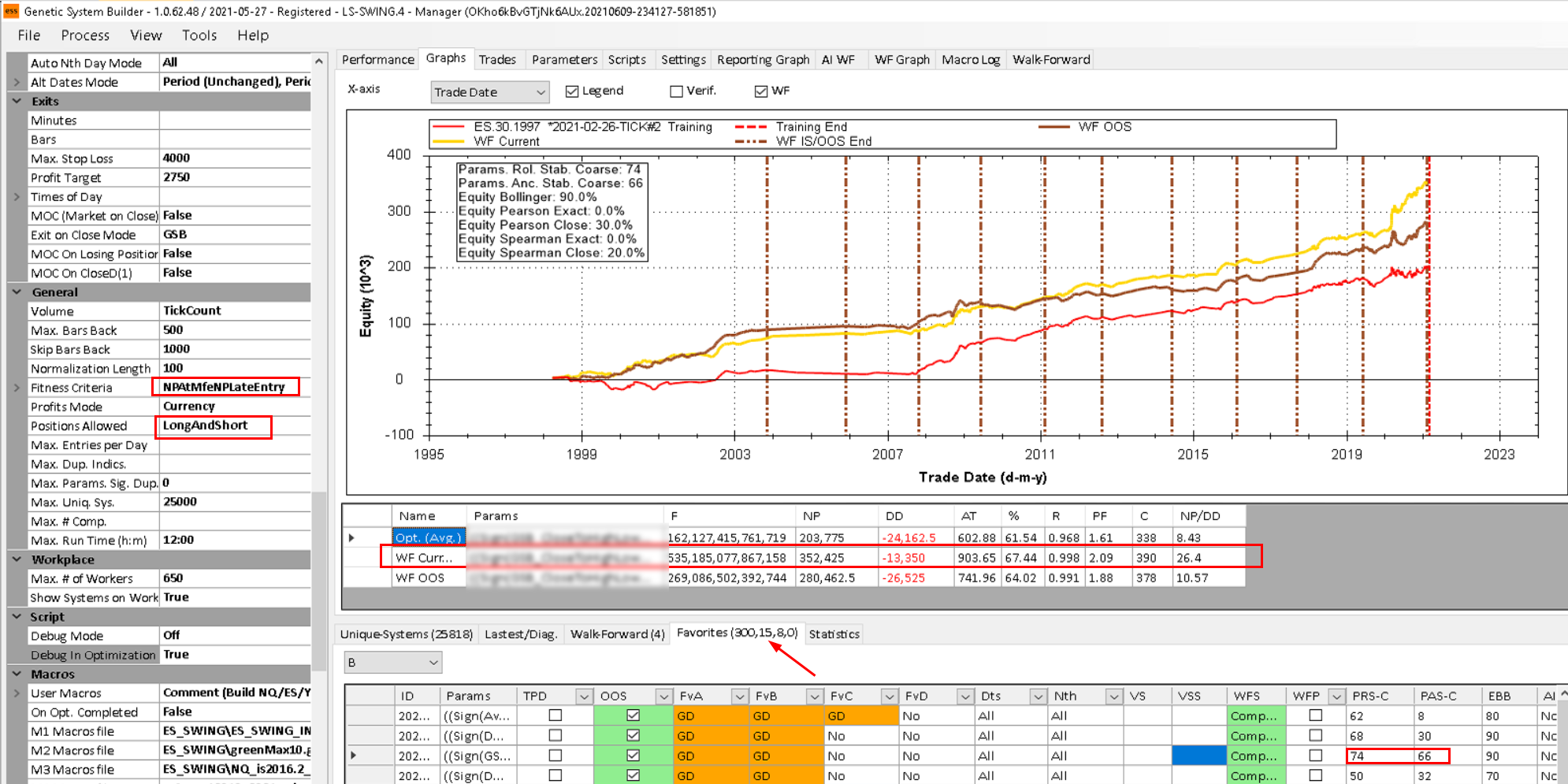
Red highlights show changes from long-only: Direction set to Long AND Short, Entry type AIC
Understand what to expect:
• Build using standard workflow
• Key observation: far fewer systems reach Favorites B
• Expect only 15 systems vs. 100-200 for long-only
• This suggests bidirectional optimization is harder
• Or fitness function penalizes dual-direction strategies
• Don't be discouraged by lower count
• Focus on walk-forward quality, not quantity
Watch for degradation patterns:
• Trade count drops in WF vs. in-sample
• Net profit also drops more than expected
• Degradation worse than long-only systems
• Possible causes:
- AIC entry doesn't WF as well as Compare2
- Fitness function not ideal for WF optimization
• Future GSB versions will allow different WF fitness
This is a known challenge with long/short systems.
Despite challenges, look for:
• Anchored WF curves with consistent progression
• Rolling WF results (often more realistic)
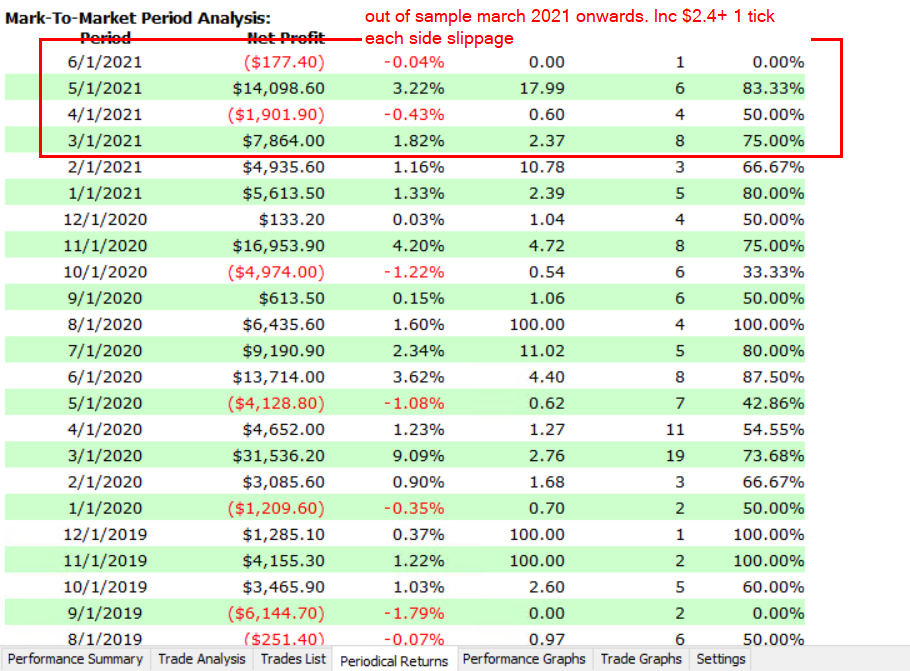
• OOS results from Feb 26, 2021 forward
• All data after this date is completely unseen
• Trade frequency consistency between IS and WF
• Featured system went live June 11, 2021
• Minutes after being built—shows confidence
Fewer systems means stricter selection standards.
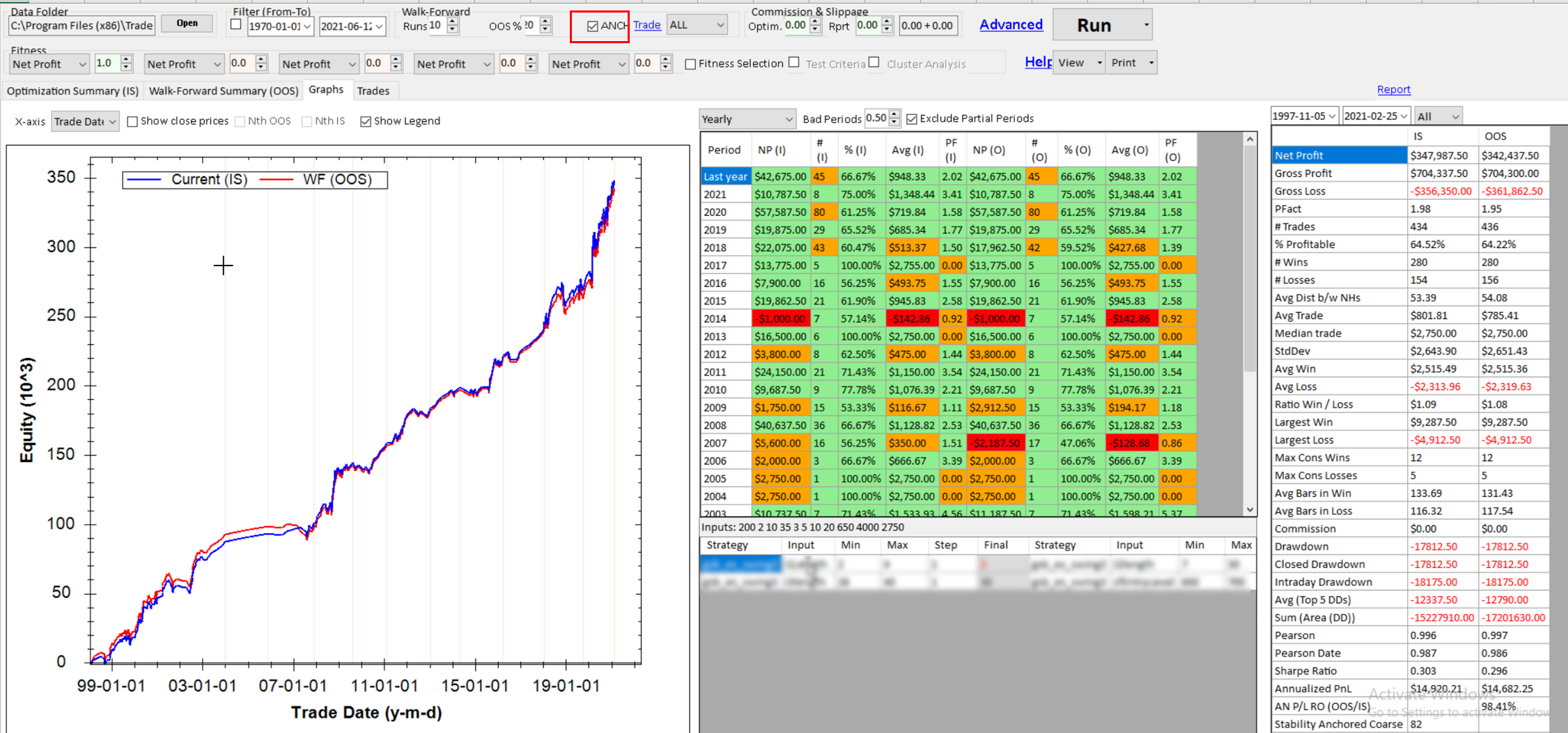
Excellent anchored WF performance showing consistent out-of-sample strength
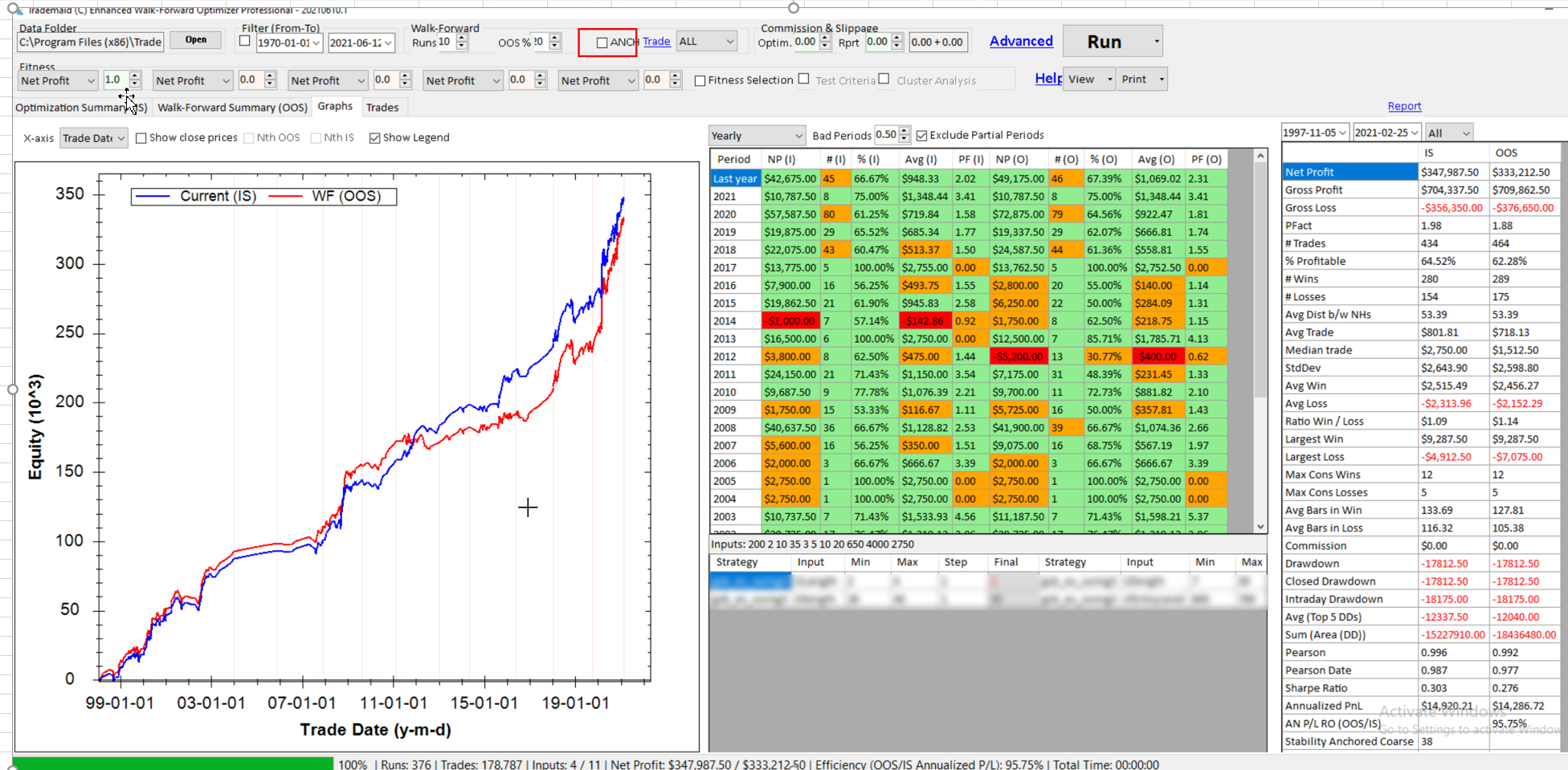
Rolling WF (harsher test) also showing excellent performance
Consistent progression through in-sample and out-of-sample periods
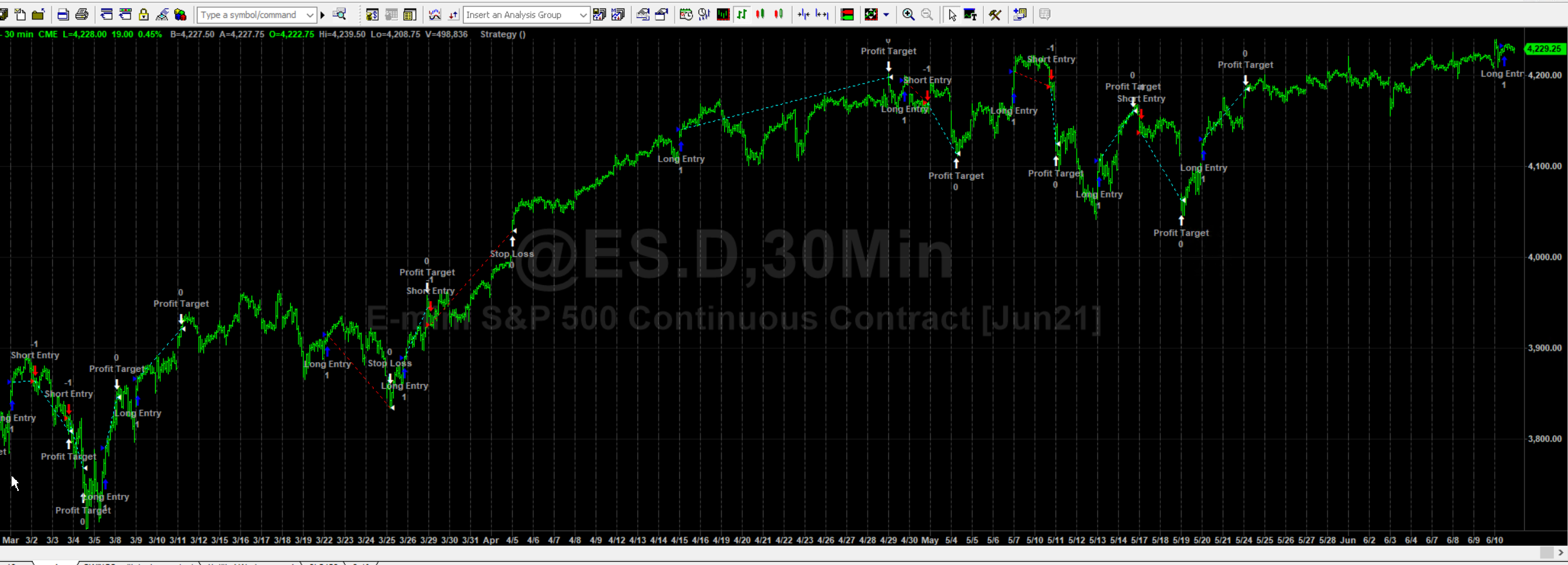
Performance on completely unseen data following system completion
Evaluate in portfolio context:
• Compare against legacy long-only (June 2018)
• Compare to new long-only swing system
• Compare to day trading systems
• Long/short fills portfolio gap
• Provides bidirectional exposure on same market
• Reduces directional bias in overall portfolio
Diversity of approaches reduces risk.
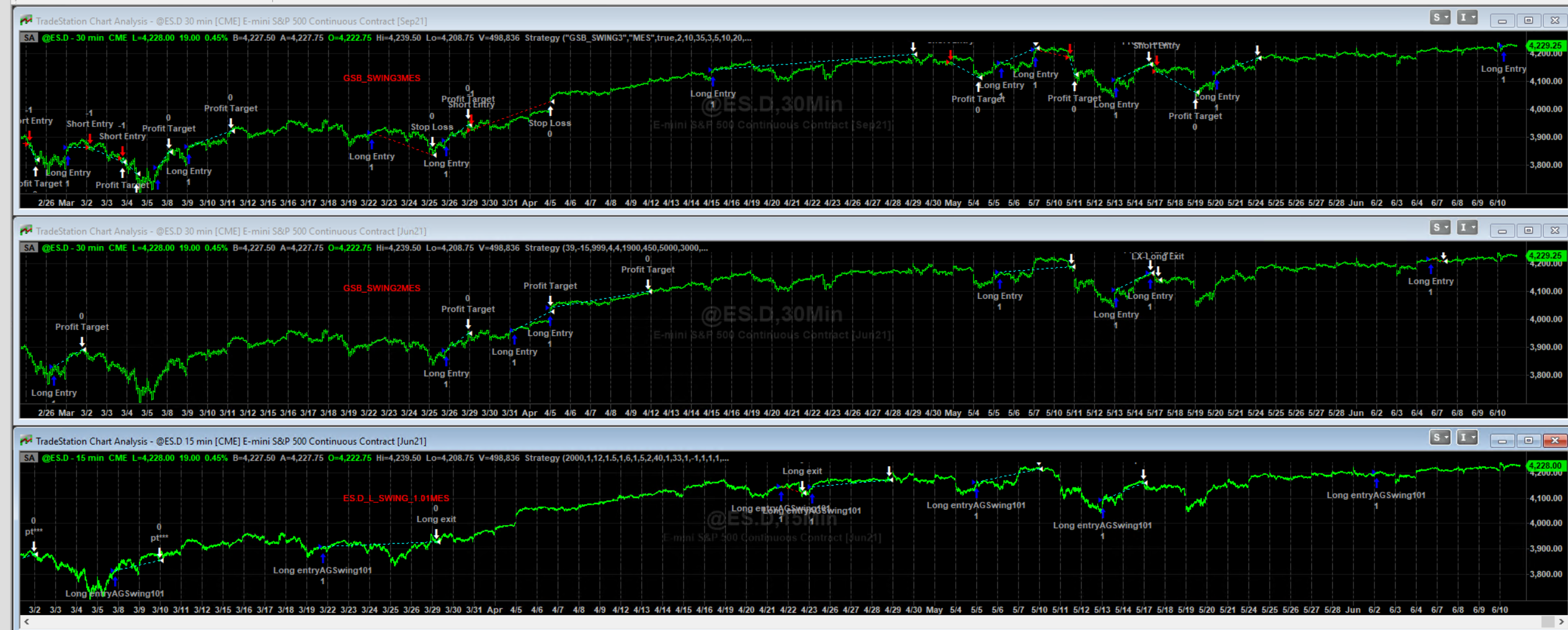
Long/short vs. new long-only vs. legacy long-only system performance
Results & Insights
The long/short approach produced excellent walk-forward results despite the optimization challenges. Anchored WF and rolling WF both showed strong, consistent performance. Out-of-sample data (Feb 26, 2021 onward) maintained profitability through varying market conditions. The key insight: fewer systems reaching Favorites doesn't mean the approach is invalid—it means you need stronger selection criteria. The systems that DO make it through are often more robust because they survived bidirectional optimization (a harder test than long-only). The trade count reduction in WF periods remains a concern requiring future research, possibly addressed through Compare2 entry testing or alternative fitness functions for the WF process itself.
Key Takeaways
Long/short systems are significantly harder to optimize than long-only approaches
Expect fewer systems in Favorites B (15 vs. 100-200) when adding short capability
Walk-forward trade count can drop substantially—monitor this metric closely
Anchored and rolling walk-forward results should both show positive performance
Entry type matters: AIC works but Compare2 may produce better WF stability
Long/short systems provide valuable portfolio diversification vs. long-only strategies
Based on methodology examples from Building S&P 500 Long/Short Systems documentation, used with permission.