
Crude Oil Fast Revised Methodology: Efficient System Building
A streamlined approach to building crude oil systems using the two-pass indicator method, specialized secondary filters, and efficient testing protocols that reduce CPU time while maintaining robustness.
Scenario
Building trading systems typically involves extensive computing time—50,000 system builds can take 8-24 hours depending on hardware and data complexity. For traders who need faster iteration cycles or want to test multiple market setups, efficiency matters. This methodology optimizes the crude oil build process through strategic choices: using TWO indicators per system (faster than three-indicator builds), eliminating the first trading hour (fewer bars to process), and implementing a two-pass indicator filter that screens 80+ indicators down to the proven 7-10 winners. The setup produces excellent out-of-sample results while cutting build time substantially compared to traditional approaches.
Approach
Set up parameters specific to crude oil:
• Bar size: 15-minute or 30-minute (30-min usually best)
• Data range: 9:00 AM - 2:30 PM exchange time
• Trading window: 10:00 AM - 2:30 PM (skip volatile first hour)
• Entry type: Compare2 only
• Secondary filters: use ONE of these four:
- CloseLessPrevHighD
- CloseLessPrevLowD
- CloseOverPrevHighD
- CloseOverPrevLowD
• Avoid CloseDminusClose family (works on other markets, not crude)
• Normalization: center scaling exclusively
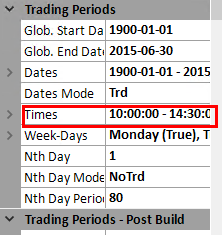
Session configuration: 9:00 AM - 2:30 PM data, 10:00 AM - 2:30 PM trading window
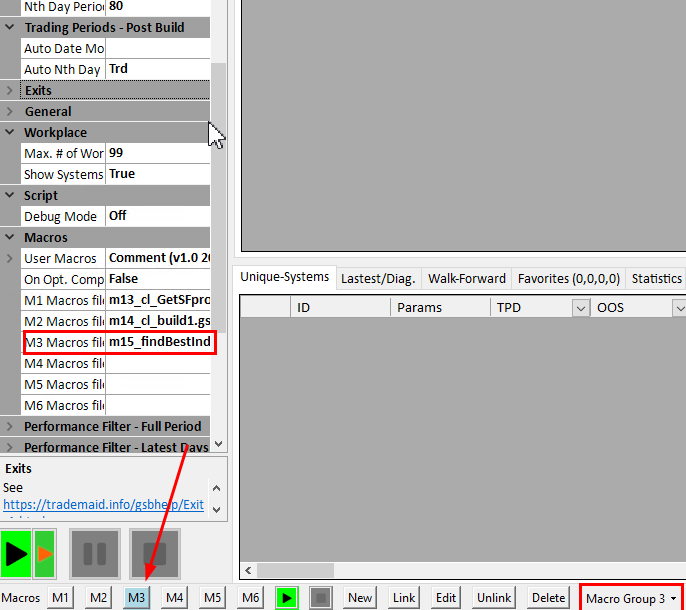
Entry type Compare2 and two-indicator configuration for efficient building
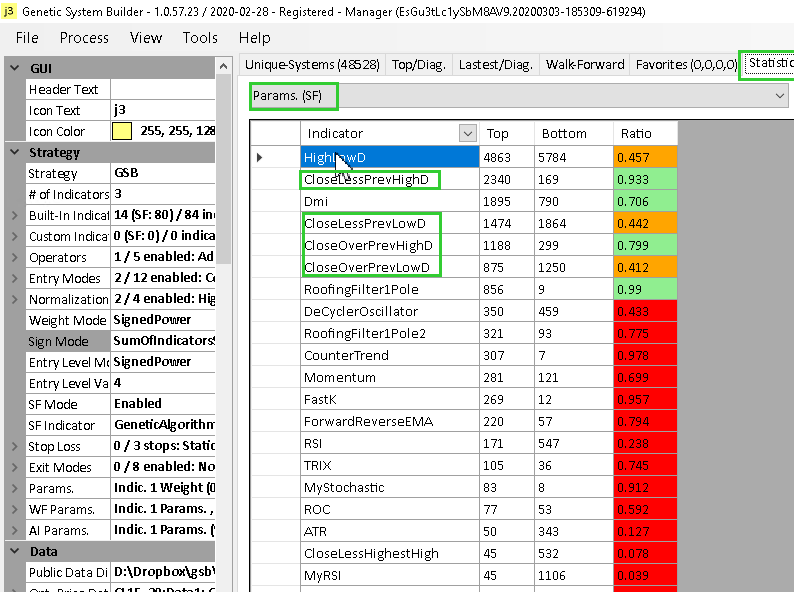
Four proven secondary filters for crude oil—use ONE at a time, not all four together
Cast a wide net initially:
• Build 50,000 systems using TWO indicators per system
• Faster than single-indicator discovery
• Run macro M15 (Group3-M3) for settings
• After build: run Statistics > Save Parameter Performance
• Select ALL green and orange indicators
• Exclude ONLY red ones
• Should drop from ~46 to ~27 indicators
This liberal approach keeps borderline performers that might excel in combinations.
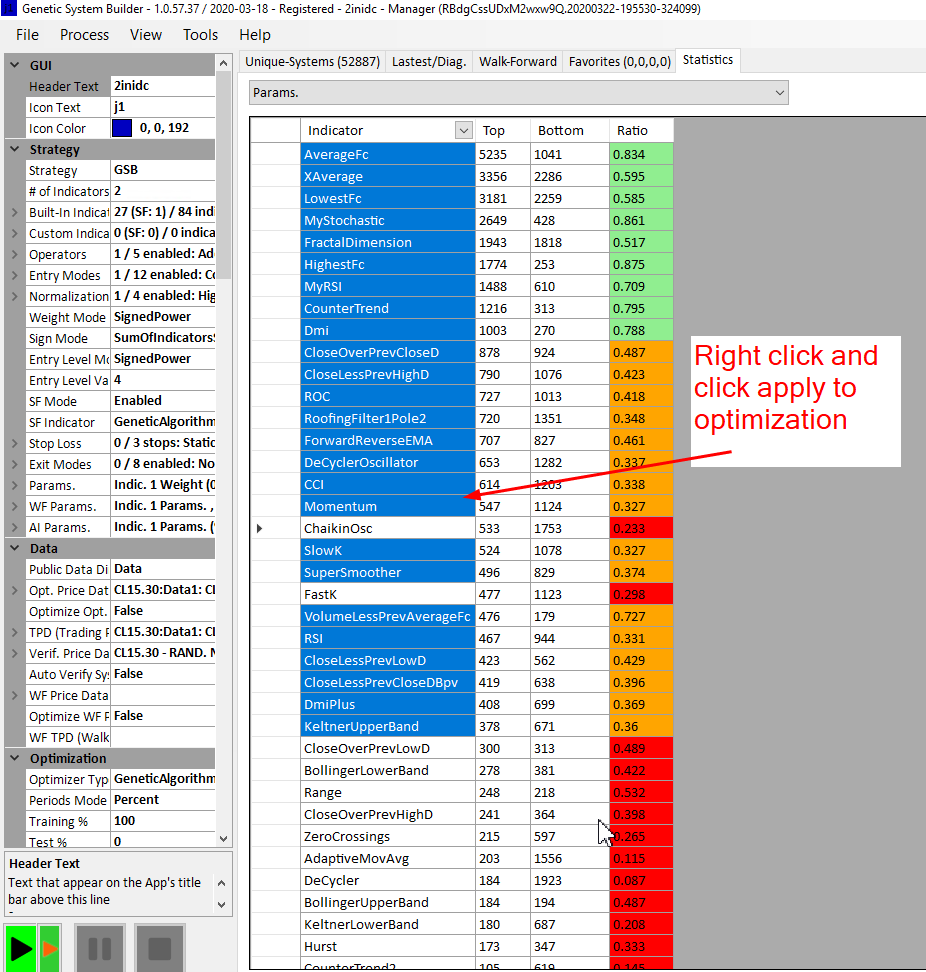
First pass: select green AND orange indicators, excluding only red performers
Narrow down to proven winners:
• Save settings and rebuild 50,000 systems
• Use your ~27-indicator filtered set
• Run Statistics > Save Parameter Performance again
• This time select ONLY green indicators (7-10 typical)
• Check OOS fitness improvement metric
• Should increase (e.g., 3,074 → 4,449)
• If it doesn't improve, review your settings
This is your quality check that filtering worked.
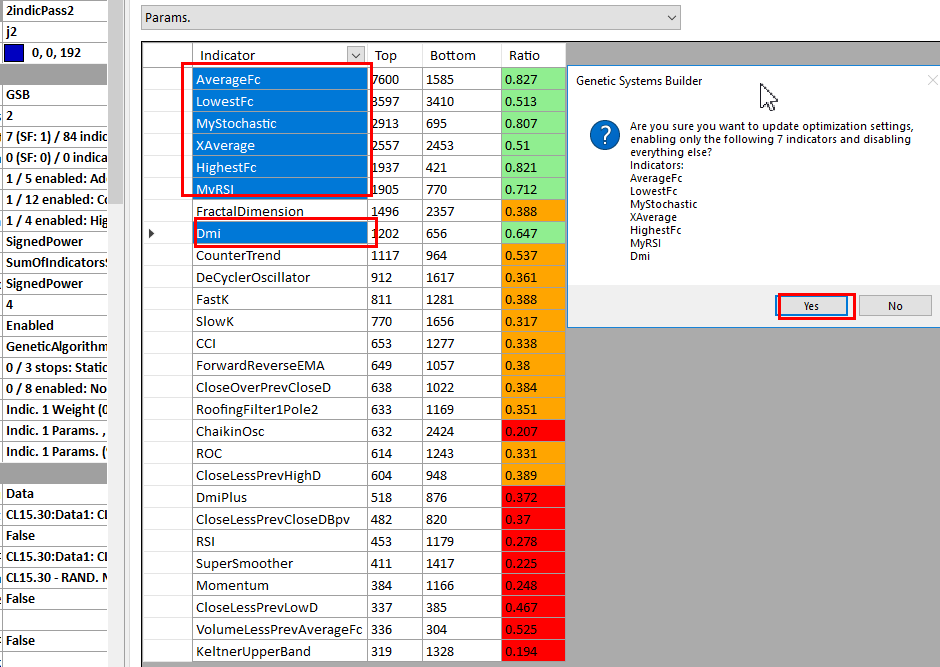
Second pass: now select ONLY green indicators (typically 7-10 total)

Fitness increased from 3,074 (Pass 1) to 4,449 (Pass 2)—confirmation of successful filtering
Create your trading candidates:
• Run macro M16 (Group3-M4) for final configuration
• Use 7-10 best indicators from Pass 2
• Build with THREE indicators (set refined, can use more)
• Important: do NOT use Nth feature for crude oil
• Build 50,000 systems
• Walk-forward top 250 to workers
• Run macro M3 (Group1) for statistics across periods C-F
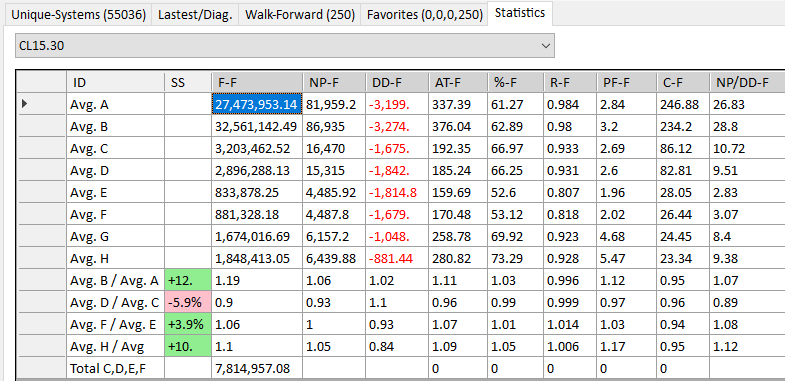
Market validation statistics showing strong performance across periods C-F
Find your most robust candidates:
• After walk-forward completes, run macro M5 (Group2)
• Gets top 90 systems by Anchored Stability Score
• Run macro M6 (Group2) for top 91 by VSS
• Create families from either group
• Choose top 1-3 families with strong member results
• System in 89 of 91 top systems = extremely robust
• This signals readiness for live trading consideration

Only 2 families in top 91 systems—first system appears in 89/91 (highly robust)
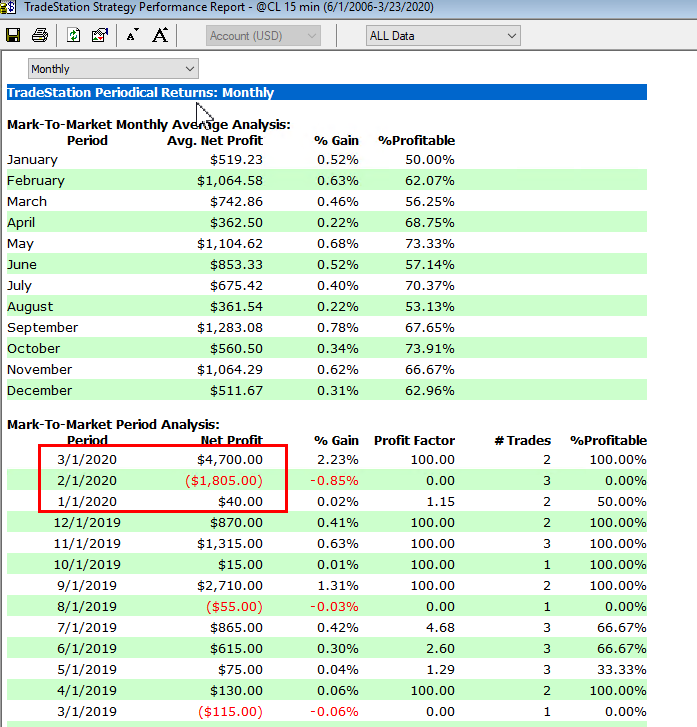
System performance on unseen data with $4.80 brokerage and $20 slippage included
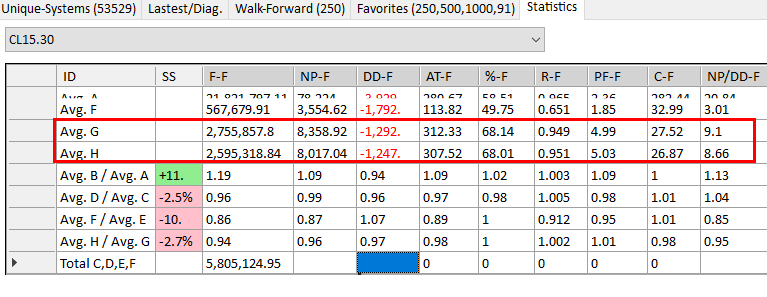
Period from March 2019 to December 2019 showing outstanding out-of-sample results
Results & Insights
The fast methodology produces systems that match or exceed traditional longer approaches while cutting build time significantly. Test results showed final walk-forward fitness scores of 7,814k-8,072k (combining periods C+D+E+F), with some runs producing even higher scores. The two-pass indicator filter introduces substantial stress testing indirectly—weak indicators that might have sneaked through single-pass selection get exposed in Pass 2. Crude oil's unique characteristics (Compare2 entry, specific secondary filters, no Nth feature) mean you can't simply port these settings to other markets. But the two-pass methodology itself transfers beautifully to any market. Market validation tests on random data sections confirmed robustness, and out-of-sample results from 2019 onwards (excellent market conditions for crude) showed the methodology's strength.
Key Takeaways
Two-pass indicator filtering removes weak performers early while keeping candidates that work in specific combinations
Using two indicators per system in Pass 1 is much faster than single-indicator discovery
Crude oil requires unique settings (Compare2 entry, specific secondary filters) that differ from index futures
Omit trading the first hour to reduce noise and improve computational efficiency
Family analysis is critical—systems that dominate their family (appearing in 80%+ of top systems) show exceptional robustness
Out-of-sample fitness scores should IMPROVE from Pass 1 to Pass 2—if they don't, review your process
Based on methodology examples from Crude Oil Fast & Revised Methodology documentation, used with permission.