
Bitcoin Trading Systems: Navigating High Volatility and Liquidity Challenges
Build robust crypto trading systems while managing Bitcoin's extreme volatility, poor futures liquidity, high margin requirements, and significant exchange price discrepancies.
Scenario
Bitcoin offers exceptional volatility (GSB-friendly) but presents unique challenges: CME futures suffer from poor liquidity with documented $475 slippage per trade, massive margin requirements ($225k long, $275k short at Interactive Brokers), prohibitive brokerage costs on micro contracts ($4.75/side at IB), and substantial price discrepancies between Binance spot, CME large contract, and CME micro contract. For algorithmic trading, these issues make traditional futures nearly untradeable for retail accounts. The solution: either use Binance futures via MultiCharts (requiring crypto exchange account and jurisdiction verification) or trade the GBTC ETF (8:30 AM - 3:00 PM Central time only) which tracks Bitcoin with its own unique behaviors. Each approach requires market-specific configuration.
Approach
For best liquidity and low margins:
• Use Binance for futures trading
• Data: 30-minute bars, 6:30 AM - 2:30 PM Central
• Secondary filter: RSI (different from other markets!)
• Build with settings tuned for crypto volatility
• Critical: build on Binance data specifically
• Don't port between CME and Binance (huge price gaps)
• Requires:
- Binance exchange account
- MultiCharts software
- Crypto trading permissions in your jurisdiction
For traditional brokerage accounts:
• Use GBTC ETF (Grayscale Bitcoin Trust)
• Allows long and short positions
• Overnight holds permitted
• Entry type: Compare2
• Position sizing: $50,000 in build
• Stop: $2,000, Profit target: $3,000 (build)
• Live trading: $2,500 stop / $4,500 target recommended
• Session: 8:30 AM - 3:00 PM Central (standard ETF hours)
• Exit type: Decision Exit (NOT Decision Exit I/SF)
Build 20,000 systems to identify best indicators (50,000 better but slower)
Find what works for crypto:
• Run macro M1 to build 20,000 systems
• 50,000 better but slower
• Bitcoin shows different indicator preferences
• Different from equity indices and crude oil
• Save green indicators to settings file
• Example: gbtc-pt3k-4750_green.gsboptset
• Close GSB completely
• Reopen with saved settings for clean config
• Run macro M2 to build 20,000 with filtered indicators
• Select from Favorites B
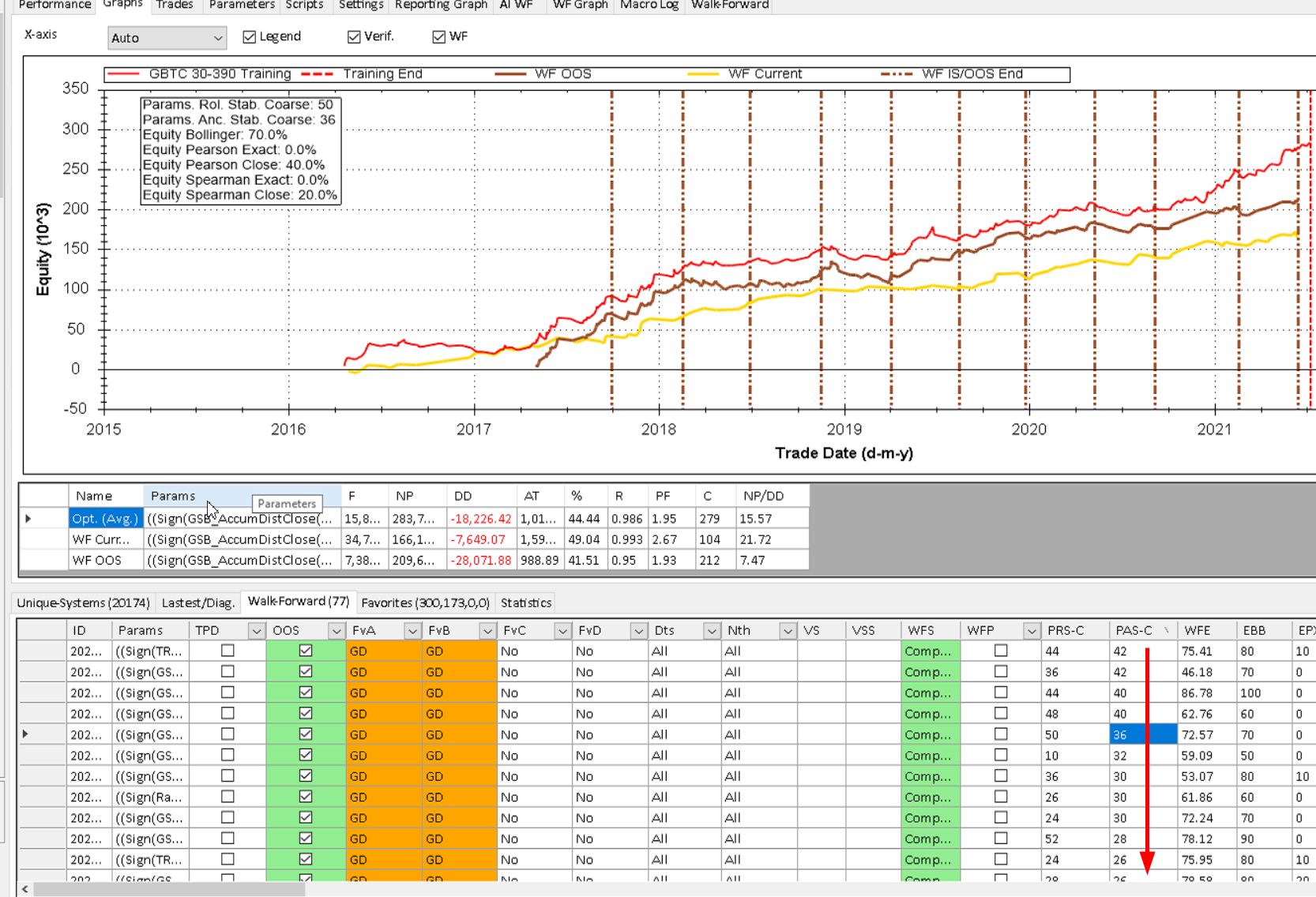
Selected system showing good stability score and acceptable walk-forward characteristics
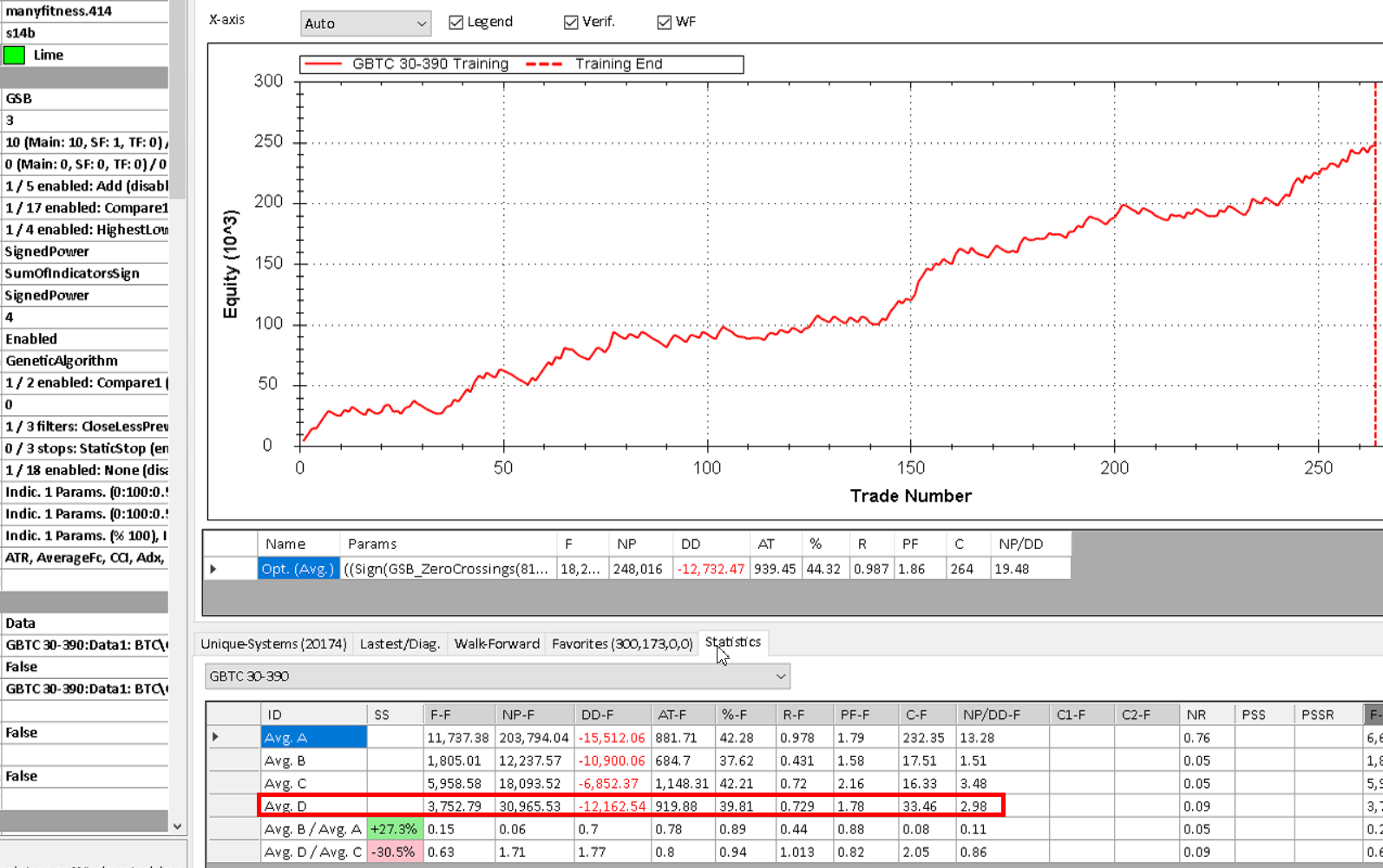
Ave D shows stats for entire OOS period—note shorter history than equity markets
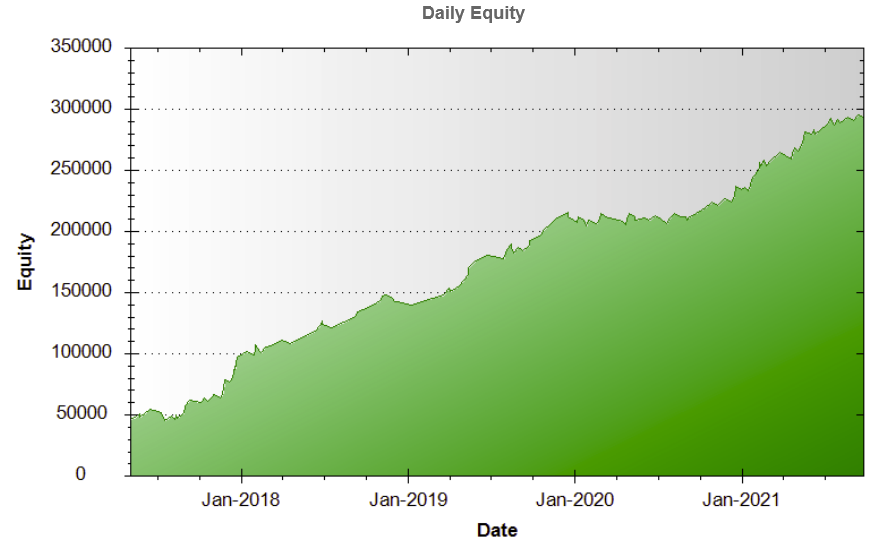
System report with slippage and commission included (link to full interactive report)
Choose candidates carefully:
• Sort by Anchored Stability Score (high to low)
• Visually inspect each candidate
• Look for:
- Consistent walk-forward curves
- Reasonable trade count (expect fewer than ES/NQ)
- Good profit factor
- Positive performance through recent data
• Bitcoin's shorter history = fewer total trades
• Compensate with stronger stability scores
Lower trade count is acceptable given limited history.

Results across multiple fitness functions showing significant variation (top test repeated 3x)
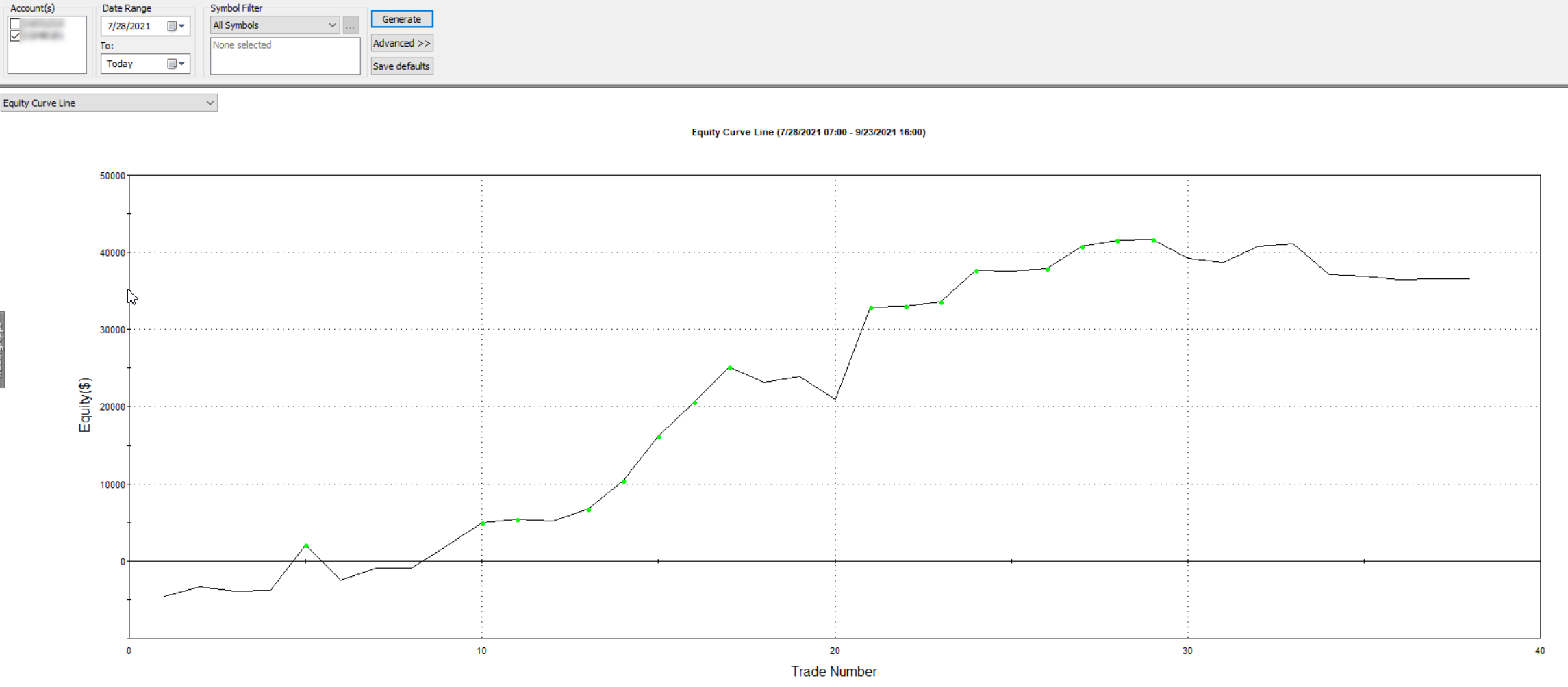
Real money results trading maximum 1 contract across 3 Bitcoin systems
Build confidence in your first system:
• Consider manual EWFO optimization in TradeStation
• Optimize each parameter individually
• Verify genetic build found genuine edges
• Time-intensive but builds confidence
• Featured GBTC system was optimized parameter-by-parameter
• Then walk-forwarded with NO OOS data remaining
• All data consumed by final WF
• Despite aggressive optimization, live performance good
Small capital allocation recommended initially.
Results & Insights
Bitcoin's extreme volatility makes it simultaneously ideal for GSB (large moves provide clear signals) and challenging for live trading (slippage and margin management). The GBTC ETF approach produced a system with NetProfitOverDrawdown × AvgTrade fitness that showed consistent walk-forward performance. GSB Automation testing across multiple fitness functions revealed significant variation in results—the top test was repeated 3 times (should have been 4) with notable differences between runs. This high run-to-run variation is expected with shorter data history. Live trading results have been positive despite having NO out-of-sample data remaining (all data consumed by final walk-forward). The system fills a unique role in a broader portfolio: high volatility, different asset class, different trading hours than ES/NQ systems.
Key Takeaways
CME Bitcoin futures are nearly untradeable for retail due to poor liquidity and massive margin requirements
Use Binance for futures or GBTC ETF for traditional brokerage account access
Bitcoin requires market-specific settings (RSI filter for Binance, Compare2 for GBTC)
Expect fewer total trades due to shorter history—compensate with higher stability score requirements
Run-to-run variation is higher on Bitcoin than equity indices—build multiple systems for portfolio
GBTC trades different hours (8:30 AM - 3:00 PM) than ES/NQ, providing time diversification
Based on methodology examples from Building Bitcoin Systems documentation, used with permission.